Can Space Heaters Replace Central Heating?
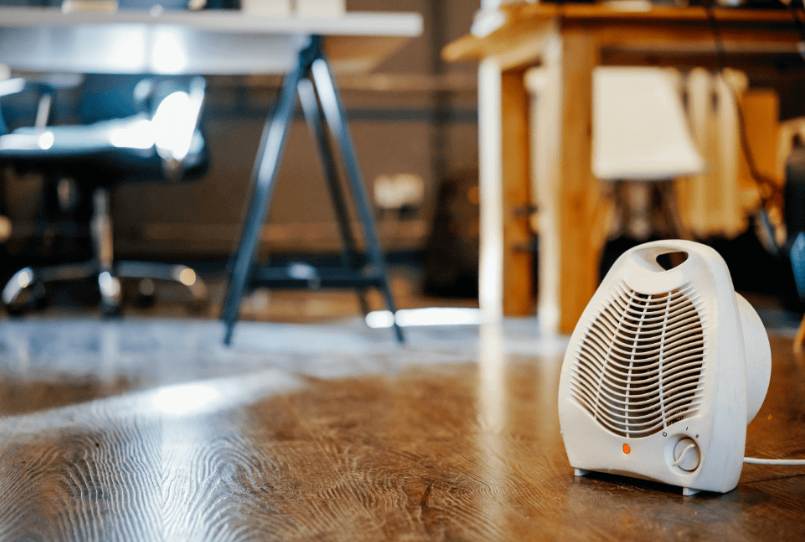
Space heaters can help you save money by allowing you to heat individual rooms. Instead of heating your entire home, you’ll only heat the rooms that you’re using.
For example, if you’re like most people, you may spend a lot of time in just one or two rooms.
During the summer months, space heaters might make sense. But can they help you save money during the winter months? Keep reading to find out!
How They Work
In order to understand whether space heaters can replace your HVAC system or not, it helps to understand how they work. The famous Online Heater Shop told us that your HVAC system heats your entire home. It sends hot air throughout your home through ducts or radiators. Space heaters, on the other hand, only heat small areas.
Only Heating One Room vs. The Whole House
Space heaters only heat small areas, so they require less energy than your HVAC system. If you’re only heating one room in your home, you may be able to get away with using a space heater. Space heaters can run on different types of power, but most are powered by electricity.
All you have to do is plug them into an outlet and turn them on. Depending on where you live, your HVAC system may run on natural gas, oil, or electricity. So, whether a space heater will save you money depends on prices from your local utility company and the cost of heating your home.
When Space Heaters Are Ideal
Space or Auxiliary heaters are ideal for heating individual rooms, so there are times when it makes sense to use one over your HVAC system. If you live alone in a large home, you might only use your bedroom and living room. Heating your entire home would cost you more money when you could be just heating those two rooms.
You also may want to use a space heater if you rent an apartment that has electric heating because it can get expensive. In this case, you could use a space heater to help heat your home. Additionally, space heaters heat up rooms quickly. When you want to turn on the heat, you don’t have to wait for your entire house to warm up. You can just heat up your home office.
Here are some situations where it’s ideal to use a space heater:
- You only use one or two rooms frequently
- You have rooms that are not properly insulated
- You live in an area with mild winters and hot summers (aka “shoulder season”)
- Certain rooms in your home are just colder than others
- You want to decrease your overall thermostat temperature and only heat occupied rooms
Limitations of Space Heaters
While space heaters can save you money under the right circumstances, there are several things you should know about them. Space heaters cannot heat a large area or multiple rooms at once. If you wanted to use them instead of your HVAC system, you would need multiple space heaters. That could get pretty expensive.
They also pose a safety risk. You should never sleep with a space heater on, nor should you leave it unattended. If it’s near a blanket, couch, or curtain; it can start a fire. According to the National Fire Protection Association, space heaters are responsible for thousands of house fires each year.
Additionally, your house may not be equipped to run multiple space heaters at once. If you do, your circuit breakers may constantly be tripping because you are overloading your system. Space heaters also don’t heat rooms evenly. You’ll have hot spots near the heater and cold spots farther away.
See also: Brooks Builders: Revolutionizing Home Renovation in Australia
Cost to Operate Space Heaters
When it comes down to it, most people want to know how much it costs to run space heaters. While you don’t need to buy HVAC equipment or installation, you still need to purchase the space heater. However, electric costs are typically more expensive than gas costs.
So, while it may be cheaper to use a space heater in one room, it could end up costing you more to run your space heater all day. On average, a 1,500-watt space heater will cost you around 20 cents an hour. If you were to leave it on for 8 hours a day, that adds up to about $48 a month. Compare that to your HVAC system that spreads out the cost to heat your whole home.
Other things you should take into consideration:
- How much the space heater costs versus your HVAC system
- Electricity vs. natural gas costs
- How many hours you’ll be using it during the day
- The size of the area you wish to heat
- Do you need to purchase smoke detectors and fire extinguishers?
Combining Them Together
One of the best ways you can use space heaters is together with your HVAC system. You can lower your thermostat to 65 degrees and use a space heater in the room you’re in. Not only will you save money by doing this, but you’ll also be using less energy.
This is a great option if you work from home. You can keep your office warm during the day without heating your whole house. At night, you can take it to your bedroom and turn the HVAC off in the rest of the house.
Deciding Whether To Use Space Heaters
Deciding whether space heaters can replace your HVAC system comes down to you and your situation. For most people, space heaters cannot replace their HVAC system. However, space heaters are a great option to help heat your home in specific rooms.
Think about the layout of your home and where you spend most of your time. Do you use every room in your home? Maybe you can identify which rooms need to be heated and which ones don’t. I would also recommend taking a look at your current energy bills.
Where you live should also play a factor in your decision. People who live in extremely cold climates will need their HVAC system. If it gets below freezing where you live for long periods of time, space heaters will not be able to keep up.
Final Words
Space heaters are a great way to save money on heating individual rooms. But for most people, they cannot replace their HVAC system. Space heaters should only be used as a supplemental heat source.
You can use them with your HVAC system by lowering your thermostat and only heating the rooms that you’re in. By doing this you won’t be wasting energy heating empty rooms. Everyone’s situation is different when it comes to deciding whether they could use a space heater.
You have to take into consideration the size of your home, where you live, your lifestyle, and your budget.
FAQ’s
Will space heaters help me replace my central heating system?
No. Space heaters are ideal for supplemental or zone heating in one or two rooms. Using space heaters to heat your whole home is highly inefficient. Your space heaters are intended as supplemental to your central HVAC system.
2. How do space heaters work?
Radiate or blow hot air into a room. They do this using one of three different methods:
- Convection heaters: Ceramic heaters and oil-filled radiators warm the air in a room
- Radiant heaters: Infrared heaters warm objects and people in a room directly
- Fan forced heaters: Forces air over a heating element to heat a room quickly
3. How much electricity do space heaters use?
Most space heaters draw between 750–1,500 watts per hour. Assuming an average heater uses 1,500 watts, if you run it 8 hours/day it will cost you about $48/month (with average cost of electricity at 15¢/kWh).
4. Are space heaters dangerous?
Newer models of space heaters are much safer than models made years ago. Look for safety features like tip-over switches and automatic overheat protection. UL & ETL certifications mean the heater has been safety-certified by an approved testing laboratory. You should still practice common safety sense and keep space heaters at least 3 feet from things that can burn, never leave space heaters unattended, and plug them directly into a wall outlet.
5. Can I leave a space heater on overnight?
No. You should not leave any heater unattended while you sleep, even if they have the safety features mentioned above. If you need warmth while you sleep, consider an electric blanket instead.
6. Which space heater type is right for me?
Figure out what your heating needs are, then match to a space heater type:
- Need quick heating for your bedroom or office? Try a ceramic heater
- Need quiet heating that lasts all night? Try an oil filled radiator
- Need direct heat while you work? An infrared heater directly heats objects and people
- Need fast heating? Try a fan forced heater (but beware of noise and drying-out of air)